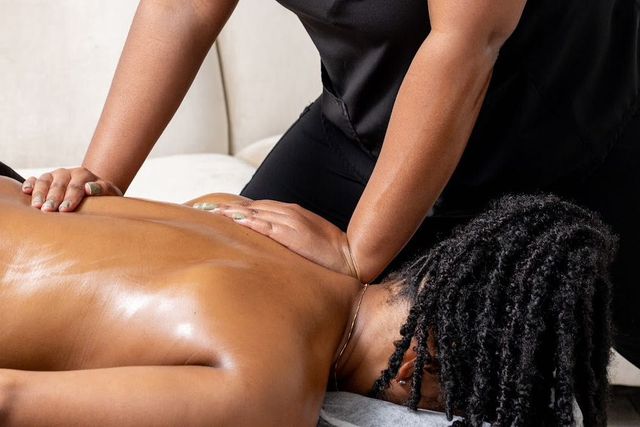
Posture Correction Nairobi — Expert Postural Alignment Therapy at TriggerPoint Fascia
Do you spend most of your day sitting at a desk, hunching over a laptop, or looking down at your phone? If so, you are not alone. Poor posture has become one of the most widespread physical complaints among working adults in Nairobi — and in most cases, it is entirely correctable with the right therapy.
At TriggerPoint Fascia, we offer specialist posture correction therapy in Nairobi that goes far beyond generic advice about sitting up straight. Instead, we use hands-on, clinically structured treatments — including postural alignment, myofascial release, deep tissue massage, and trigger point therapy — to identify and fix the root causes of your postural dysfunction.
Whether you are dealing with a stiff neck, rounded shoulders, persistent lower back pain, or recurring headaches linked to your posture, our team can help you stand taller, move better, and live with significantly less pain.
What Is Poor Posture — And Why Does It Matter?
Posture refers to the way your body holds itself during movement and at rest. Good posture means your bones and joints are properly aligned, your muscles work efficiently, and your body distributes load evenly across its structures. Poor posture, on the other hand, forces certain muscles to overwork while others weaken and switch off — creating a cycle of tension, pain, and dysfunction that gets worse over time if left untreated.
Furthermore, poor posture is not simply a cosmetic issue. Research consistently links postural dysfunction to a wide range of physical health problems, including chronic neck and back pain, tension headaches, reduced lung capacity, digestive discomfort, joint degeneration, and nerve compression.
In Nairobi, the rise of desk-based office work, long daily commutes, and increased screen time means that postural problems are developing faster — and at younger ages — than ever before. However, the good news is that with the right postural correction therapy, most of these problems are highly treatable.
Common Causes of Poor Posture in Nairobi
Understanding what causes your postural problems is the first step towards fixing them. In our clinical experience at TriggerPoint Fascia, the most common causes we see among Nairobi clients include:
Prolonged sitting and desk work Sitting for long periods — especially in poorly set-up workstations — is one of the leading drivers of postural dysfunction in Nairobi. Over time, sitting shortens the hip flexors, weakens the glutes, tightens the chest muscles, and causes the upper back to round forward into a hunched position.
Excessive screen and phone use Looking down at a phone or forward at a screen for hours every day gradually pulls the head forward of its natural position over the spine. This condition — known as forward head posture — adds enormous stress to the neck and upper back. Specifically, for every inch the head moves forward, it effectively doubles the load on the cervical spine.
Muscle imbalances from exercise Unbalanced training programmes that overdevelop certain muscle groups while neglecting others create postural distortions. For example, heavily training the chest without equally working the upper back pulls the shoulders forward. Similarly, strong quadriceps without equally strong hamstrings and glutes contribute to anterior pelvic tilt.
Previous injuries and compensations When the body sustains an injury — even a minor one — it develops compensatory movement patterns to protect the injured area. Unfortunately, these compensations often persist long after the injury heals, embedding postural distortions that become chronic over time.
Stress and psychological tension Chronic stress causes people to habitually tense their shoulders, clench their jaw, and tighten their neck and upper back muscles. Over time, this constant tension reshapes posture, particularly in the upper body.
Poor sleep positioning Sleeping on an unsuitable mattress or in positions that twist the spine puts the body into prolonged postural stress for hours at a time. As a result, people often wake up with stiffness and pain that accumulates over months and years.
Signs You May Need Posture Correction Therapy in Nairobi
Many people live with postural dysfunction for years without recognising it as the source of their symptoms. Here are the most common signs that poor posture is affecting your health and quality of life:
- Persistent neck stiffness or pain, especially after sitting or screen use
- Rounded, hunched, or pulled-forward shoulders
- Recurring tension headaches or headaches at the base of the skull
- Chronic upper, mid, or lower back pain
- A head that sits visibly forward of your shoulders when viewed from the side
- One shoulder sitting noticeably higher than the other
- Tight, shortened hip flexors and a forward-tilting pelvis
- Knee pain, flat feet, or hip problems linked to misalignment
- Difficulty standing straight for extended periods
- Fatigue and reduced energy linked to inefficient movement and breathing
- Numbness or tingling in the arms or hands from nerve compression in the neck
If you recognise two or more of these signs, postural correction therapy at our Nairobi clinic can make a significant and lasting difference.
The Most Common Postural Dysfunctions We Treat
At TriggerPoint Fascia in Nairobi, we regularly treat the following postural conditions:
Forward Head Posture
This is arguably the most common postural problem in modern life. Forward head posture occurs when the head drifts forward of its natural alignment above the shoulders — typically as a result of prolonged screen use or phone use. It creates chronic tension in the neck, upper back, and shoulders, and is a leading cause of tension headaches and cervicogenic (neck-related) headaches.
Rounded Shoulders (Kyphosis)
Rounded shoulders develop when the chest muscles become tight and shortened while the upper back muscles weaken and lengthen. The result is a rounded, hunched appearance in the upper back. In addition to its visual impact, this posture restricts breathing, compresses the shoulder joints, and increases the risk of rotator cuff injuries.
Anterior Pelvic Tilt
Anterior pelvic tilt occurs when the front of the pelvis drops forward and the back of the pelvis rises — creating an exaggerated arch in the lower back. It is very common among people who sit for long periods, as prolonged sitting tightens the hip flexors and weakens the glutes. Consequently, it is a major contributor to chronic lower back pain and hip discomfort.
Posterior Pelvic Tilt
The opposite of anterior pelvic tilt, posterior pelvic tilt flattens the natural curve of the lower back. It is common in people with tight hamstrings and weak hip flexors. Over time, it contributes to lower back pain, reduced athletic performance, and difficulty with movements like squatting and bending.
Scoliosis-Related Postural Issues
While structural scoliosis requires specialist medical management, many people have a functional lateral curvature of the spine — often caused by muscle imbalances, leg length differences, or habitual one-sided postures. Our postural therapy significantly reduces the muscular tension and compensatory patterns associated with these conditions.
Upper Crossed Syndrome
Upper crossed syndrome describes a specific pattern of muscle imbalance in the upper body — tight chest and neck muscles crossing with weak deep neck flexors and lower trapezius muscles. It produces the classic desk-worker posture: head forward, shoulders rounded, and upper back hunched.
Lower Crossed Syndrome
Lower crossed syndrome involves tight hip flexors and lower back muscles crossing with weak abdominals and glutes. It produces an exaggerated lower back arch, a protruding abdomen, and is one of the most common patterns we see in Nairobi office workers and athletes alike.
Our Posture Correction Approach at TriggerPoint Fascia
Unlike generic physiotherapy that focuses only on exercises, our posture correction approach at TriggerPoint Fascia in Nairobi is hands-on, multi-modal, and clinically structured. We combine several specialist therapies to address both the symptoms and the root causes of your postural dysfunction.
Step 1 — Postural Assessment
Every posture correction journey at our clinic begins with a thorough assessment. We observe your standing posture from the front, back, and side. We assess your movement patterns, identify areas of tightness and weakness, and map out the specific dysfunctions driving your postural problems.
This assessment is critical because posture correction is not one-size-fits-all. Two clients with rounded shoulders may have completely different underlying causes — and therefore require different treatment approaches.
Step 2 — Myofascial Release and Deep Tissue Massage
Once we identify the tight, overactive muscles contributing to your postural dysfunction, we use myofascial release and deep tissue massage to soften and lengthen them. For example, in a client with forward head posture and rounded shoulders, we focus deeply on the chest, anterior shoulder, and neck muscles that are pulling the body out of alignment.
Releasing these tight tissues is a fundamental first step because even the best corrective exercises will not hold if the underlying muscular restrictions remain in place.
Step 3 — Trigger Point Therapy
Many postural dysfunctions involve active trigger points — hyper-irritable spots within tight muscle bands that cause both local and referred pain. These trigger points often develop in the muscles most overloaded by poor posture, such as the upper trapezius, levator scapulae, and suboccipital muscles.
By deactivating these trigger points with precise manual pressure, we directly reduce the pain and muscular tension that your postural problems are generating — often providing rapid and significant relief.
Step 4 — Fascial Stretch Therapy
After releasing tight muscles and trigger points, we use Fascial Stretch Therapy (FST) to restore mobility to the joints and fascial chains restricted by your postural pattern. FST targets the connective tissue network — the fascia — that surrounds your muscles, joints, and nerves throughout the body.
Because fascia forms interconnected chains from head to foot, restrictions in one area often pull on distant structures. As a result, addressing the full fascial chain produces far more lasting postural improvements than working on isolated muscles alone.
Step 5 — Postural Alignment and Corrective Work
In the final stage of each session, we guide your body back towards its optimal structural alignment. We use specific hands-on techniques to reposition joints, activate underused muscles, and reinforce the neuromuscular patterns your body needs to maintain good posture between sessions.
We also give you simple, targeted home exercises to support and accelerate your progress. Importantly, these are always personalised based on your specific postural pattern — not generic exercises copied from a leaflet.
How Long Does Posture Correction Take?
This is one of the most common questions we receive at our Nairobi clinic, and the honest answer is: it depends on how long the dysfunction has been present and how consistently you engage with therapy.
As a general guide:
- Recent postural problems (under 6 months): Most clients notice significant improvement within 4–6 sessions.
- Moderate postural dysfunction (6 months to 2 years): An 8–12 session programme typically produces substantial, lasting change.
- Long-standing postural dysfunction (2+ years): Deeper patterns require 12–20 sessions to fully address. However, most clients in this group feel meaningful improvement from as early as sessions 3 or 4.
It is also important to understand that posture correction is a process, not a one-session fix. The body developed its current postural pattern over months or years. Therefore, retraining it requires consistent therapeutic input combined with daily habits that reinforce the changes.
Who Needs Posture Correction Therapy in Nairobi?
Our posture correction services are beneficial for a broad range of people across Nairobi. In particular, the following groups see consistent and significant results:
Office workers and remote workers If you spend 6 or more hours per day sitting at a desk or working on a laptop, you are developing postural dysfunction whether you feel it yet or not. Proactive posture correction therapy prevents the accumulation of postural damage before it becomes painful.
Students Long hours studying, using laptops, and looking at phones make students particularly vulnerable to forward head posture, rounded shoulders, and upper back pain. Moreover, addressing these issues early prevents them from becoming lifelong conditions.
Athletes and gym-goers Postural imbalances reduce athletic performance, limit range of motion, and significantly increase injury risk. As a result, many athletes in Nairobi come to us specifically to correct the movement inefficiencies that are holding their performance back or causing recurring injuries.
Drivers and commuters Nairobi’s notorious traffic means that many residents spend 2–4 hours per day sitting behind a wheel. This prolonged position tightens the hip flexors, compresses the lower back, and rounds the upper back — creating a near-identical postural pattern to desk work.
Parents and caregivers Repeatedly lifting, carrying, and bending over children and dependents creates asymmetrical loading patterns and postural strain, particularly in the lower back and shoulders.
People recovering from injuries As previously mentioned, injuries commonly leave postural compensations in their wake. Therefore, posture correction is often an important component of complete injury rehabilitation.
Posture Correction vs Physiotherapy — What Is the Difference?
Many people in Nairobi search for posture correction physiotherapy — and it is worth clarifying how our approach at TriggerPoint Fascia compares.
Traditional physiotherapy for posture typically focuses primarily on exercise prescription: identifying weak muscles and giving you a home programme to strengthen them. This is valuable, but it often overlooks the tight, overactive muscles and fascial restrictions that are equally responsible for the postural pattern.
At TriggerPoint Fascia, we take a more comprehensive approach. We combine hands-on manual therapy — myofascial release, trigger point therapy, deep tissue massage, and fascial stretch therapy — with postural assessment and corrective work. Consequently, we address the full picture: releasing what is tight, activating what is weak, and restoring the fascial mobility that holds structural change in place.
The result is faster progress, longer-lasting outcomes, and a more complete resolution of the postural dysfunction.
Posture Correction at Home — Supporting Your Therapy Between Sessions
While hands-on therapy is the most powerful tool for correcting entrenched postural dysfunction, what you do between sessions matters enormously. Here are the most effective habits to support your posture correction therapy in Nairobi:
Set up your workspace properly Your screen should sit at eye level, your feet flat on the floor, and your hips and knees at 90 degrees. Additionally, your keyboard and mouse should allow your shoulders to relax — not hunch up towards your ears.
Take regular movement breaks Stand up and move for at least 2–3 minutes every 45–60 minutes of sitting. Even a short walk to get water resets the muscular tension that builds during prolonged sitting.
Strengthen your posterior chain The glutes, lower and mid trapezius, and deep neck flexors are chronically weak in most people with poor posture. Simple exercises like glute bridges, face pulls, and chin tucks — done consistently — make a significant difference.
Stretch your hip flexors and chest daily A simple hip flexor stretch held for 60–90 seconds on each side, combined with a doorway chest stretch, directly counteracts the two most common tight muscle patterns associated with desk-based postural dysfunction.
Be mindful of your phone use Bring your phone up to eye level rather than looking down at it. Furthermore, take regular breaks from prolonged phone use to give the neck muscles a chance to recover.
Sleep in a neutral position A supportive pillow that keeps your neck in a neutral position — not too high or too flat — makes a meaningful difference to morning stiffness and the cumulative postural load on your cervical spine.
Why Choose TriggerPoint Fascia for Posture Correction in Nairobi?
There are several physiotherapy and wellness clinics in Nairobi offering posture-related services. However, here is why clients consistently choose TriggerPoint Fascia:
- Specialist soft tissue expertise — Posture correction is not a side service for us. Our entire clinical focus is on soft tissue and fascial therapy, which means we bring a deeper level of expertise to postural dysfunction than a general wellness provider.
- Hands-on, multi-modal treatment — We do not simply hand you a sheet of exercises. Instead, every session involves active, hands-on therapy that produces immediate and tangible change in how your body feels and moves.
- Personalised assessment — We assess your specific postural pattern before designing your treatment plan. As a result, your sessions address your individual dysfunction — not a generic template.
- Fascial specialisation — Our expertise in myofascial release and fascial stretch therapy means we address the connective tissue component of postural dysfunction that most other clinics overlook entirely.
- Integrated approach — We combine therapy with practical education, giving you the knowledge and tools to maintain your posture improvements independently between sessions.
- Accessible Nairobi location — Our clinic is conveniently located for clients across Nairobi, making it easy to maintain a consistent treatment schedule.
Frequently Asked Questions — Posture Correction Nairobi
Can poor posture be permanently corrected?
Yes — in most cases, poor posture is fully correctable with consistent therapy and supportive daily habits. The body is highly adaptable. Just as it learned its current postural pattern, it can learn a new one. However, this requires regular therapeutic input and a commitment to the home habits that reinforce the changes between sessions.
How many sessions will I need for posture correction?
Most clients notice meaningful improvement within 4–6 sessions. However, the total number of sessions depends on how long the postural dysfunction has been present and how severe it is. After your initial assessment, your therapist will give you a clear recommendation for a treatment plan.
Is posture correction therapy painful?
The hands-on treatment involves some productive discomfort — particularly during deep tissue work and trigger point release in tense muscles. However, the vast majority of clients describe the experience as a relieving discomfort rather than painful. Moreover, most clients leave each session feeling noticeably lighter, freer, and more upright than when they arrived.
Does posture correction help with back pain?
Yes — significantly. Poor posture is one of the leading causes of chronic back pain, particularly in the lower and upper back. By correcting the postural imbalances that generate excessive load on the spine and surrounding muscles, posture correction therapy directly reduces and often eliminates long-standing back pain.
Can I combine posture correction with sports therapy?
Absolutely. In fact, we strongly recommend it for athletes. Postural correction directly improves biomechanical efficiency, which translates into better athletic performance and a lower injury risk. Many of our clients combine posture correction with our Sports Therapy bundle for comprehensive results.
Do you treat children and teenagers?
Yes. Poor posture is increasingly common among young people in Nairobi due to heavy school bags, prolonged studying, and excessive phone use. The earlier postural dysfunction is addressed, the easier and faster it is to correct — making therapy during teenage years particularly valuable.
Book Your Posture Correction Session in Nairobi
Poor posture does not improve on its own. In fact, without treatment, most postural dysfunctions gradually worsen — creating more pain, more restriction, and more complex problems to address down the line.
The good news is that with the right therapy, correction is absolutely achievable. At TriggerPoint Fascia, we have helped many clients across Nairobi reclaim pain-free, well-aligned posture — and we can help you too.
Take the first step today.
👉 Book Your Posture Correction Session 👉 View All Services
TriggerPoint Fascia — Nairobi’s Specialist Soft Tissue & Fascial Therapy Clinic www.bettingandgamblinglawyersinkenya.co.ke/